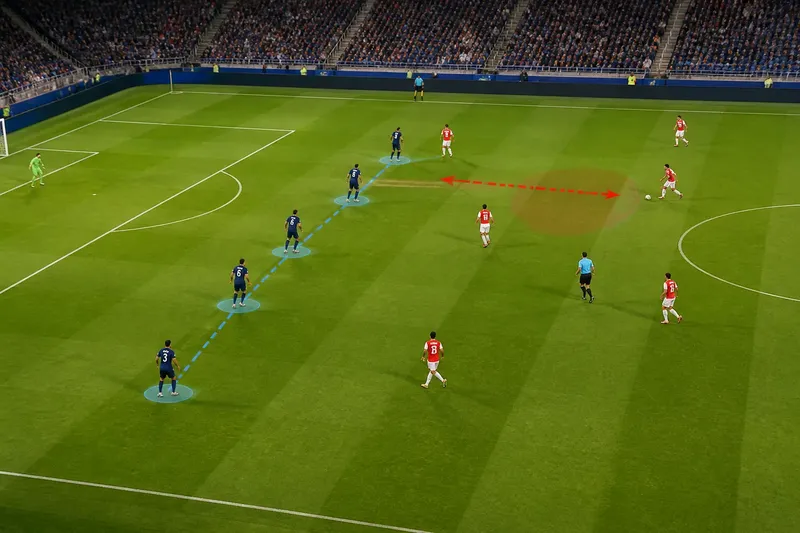
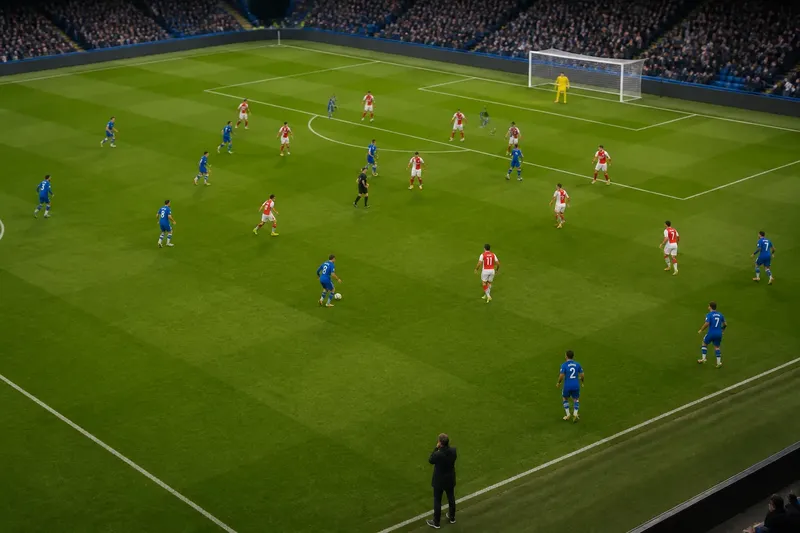
The Scoreboard Before the Digital Age
The scoreboard before the digital age made a match’s state easier to follow. See how manual displays worked and what their figures left out.
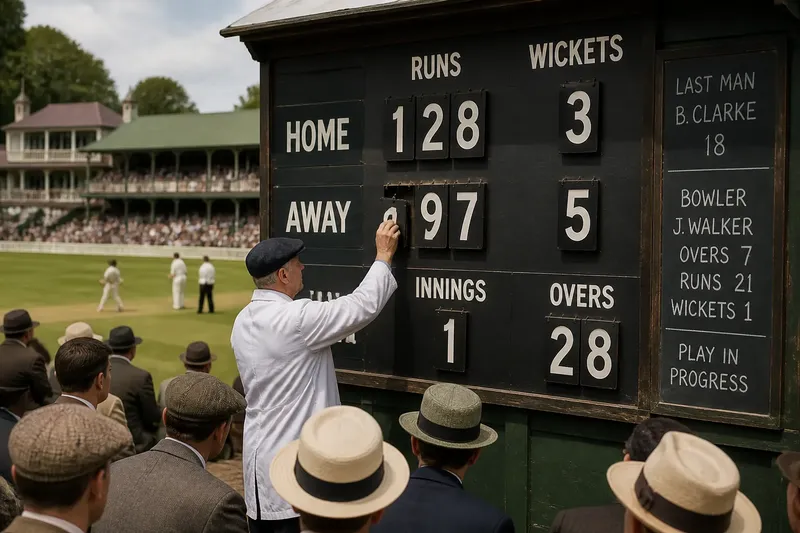
The common mistake is to imagine that every early crowd could consult a public scoreboard; the cost was having to piece together the contest from announcements, neighbours or missed moments of play. The scoreboard before the digital age had no single origin shared by every sport: its form depended on local rules, venues and customs. What a manual board offered was simpler and more specific—a visible record that spectators could check together.
Records and displays
Keeping a score and showing it to a crowd are different jobs. A scorer might record events on paper, a slate or a working board without making that record visible to spectators. A public display took selected information from that record and put it where people watching could consult it.
There is no sound basis for treating this as one universal transition. Cricket, football and other sports have different scoring systems, and their venues have used different ways to communicate results. A hand-changed board, a card display or a chalked surface might serve a particular setting; those examples describe possible methods, not a single timeline for all sports.
A display also offered only a partial account. It could show a total or a match phase, but not the quality of a pass, the pressure of a rally or the reasoning behind a decision. Spectators still needed to watch the action and understand the rules.
Manual scoreboards
Before electronic displays, people could make a score visible by writing it on a board, changing a card, moving a marker or turning a numbered panel. Which method made sense depended on what information the sport needed to show and what the venue could accommodate.
Each method had practical limits. Chalk allowed a scorer to write changing information, while cards or panels relied on the right mark being ready and placed correctly. In every case, someone had to interpret an event, decide what the official record should reflect and update the display. A visible score did not remove that human judgement; it made its result public.
Location mattered too. A board placed near the playing area might be easy for some spectators to see and hidden from others. A more prominent position could help a larger part of the crowd, provided its labels and figures were readable from there.
Shared match context
A public score gave spectators a common reference. Someone who missed a play could check the displayed state rather than depend entirely on a neighbour’s account. But the information might still be incomplete: a board showing a total alone could omit the time remaining, the current innings or the sequence of rounds.
Imagine a spectator arriving at a cricket ground after the start of play. The board shows each side’s runs and wickets. Those figures help the newcomer understand the current position; watching the pitch then supplies the detail behind the numbers and how the situation changes. The display provides a starting point, not the whole story.
What figures omit
Every display reflects a choice about what spectators need to see. A total answers one question; a period, innings, set or clock can answer others. Adding more information can make a board more useful, but spectators still need labels that make clear what each figure means.
An omission is not automatically a mistake. A display might show who is ahead but not how much time remains, or give an overall total without showing the outcome of each round. And a number cannot explain a disputed call: it records the recognised score, while an announcement or knowledge of the rules may explain how that score was awarded.
Reading a manual board
Start with the labels. Identify which side each figure belongs to, then check whether the board distinguishes a match phase, such as an innings or period. Separate score figures from a clock or count, and watch for changes alongside the action or an official announcement.
- Labels: If each figure is clearly assigned to a side or player, use that mapping; if not, look for a legend or ask an attendant before comparing totals.
- Match phase: If an innings, period or set is displayed, use it to place the score in context; if it is absent, avoid assuming the total tells the whole state of play.
- Clock or count: If a figure is labelled as time or a count, read it separately from the score; if the label is unclear, wait for an announcement rather than treating it as a total.
- Recent change: If a marker changes after a play, connect it to that event where possible; if it appears out of step, check for an official announcement before deciding the board is wrong.
- Missing context: If the board omits remaining time or round-by-round results, keep that uncertainty in mind; if those details affect your reading, listen for an announcement or consult the relevant match information.
- Unclear mark: If a card or chalk figure is hard to read, seek a clearer view or an announcement; if neither is available, do not treat a guess as a confirmed score.
Say you arrive at a cricket ground and see a board with two columns of figures, one for each side, but no obvious label for the smaller number beside a total. You first check the headings and see “runs” and “wickets”, then listen as an attendant announces that the current innings is still in progress. You can now read the larger figures as runs and the smaller ones as wickets, while recognising that the board does not tell you how much play remains. The useful answer is a partial one: you know the displayed score and phase, but need an announcement or another source for the missing context.
Why do public scores matter?
Did every spectator see a score?
No. A score could be kept for officials or organisers without a display for the crowd. Public visibility depended on the sport and venue.
Who updated a manual board?
A designated person, such as an attendant or scorer, could change the cards, markers, panels or chalk. The particular method varied with the display and the information being recorded.
Did a board explain the match?
It made selected information easier to consult, but did not explain tactics, rules or disputed decisions. Watching the play and hearing relevant announcements remained important.
What did electronic displays change?
They made it possible to change and present information differently from a manually updated board. The basic purpose remained: give spectators a readable account of selected parts of the contest.
Reading beyond the score
The scoreboard before the digital age is best understood as a combination of a record, a person who updated it and a display that spectators could see. Its materials and conventions varied, so a board is evidence of how one venue communicated a match—not proof of a universal history.
That distinction is useful whenever you read a scoreboard: check what its labels establish, then notice what they leave out. The score gives you a public account of selected events; the play and the rules explain what those events mean.